
Physical Gold vs. Gold ETF: Which Suits Your Strategy Better?
Gold can provide security – but not every gold investment works the same way. Those who own real gold choose a tangible asset. Those who invest in a Gold ETF, Gold ETC, or certificate are choosing a financial product that tracks the gold price. This page explains the key differences and helps you make the right decision for your personal investment strategy.


Physical Gold vs. Gold ETF – The Fundamental Decision
Anyone looking to invest in gold often faces the same question: buy physical gold or invest through an exchange-traded product such as a Gold ETF, Gold ETC, or certificate? Both approaches can make sense – but they serve different purposes.
Physical gold means: you own actual bars or coins. A Gold ETF, Gold ETC, or certificate means: you own a financial product whose value tracks the gold price. The difference is therefore not merely technical – it affects ownership, access, risk, and custody.
For investors, what matters is what they want to achieve with gold: a flexible addition to their securities account, a hedge against portfolio fluctuations, or a tangible asset held independently of digital financial products.

What Does Physical Gold Mean in Practice?
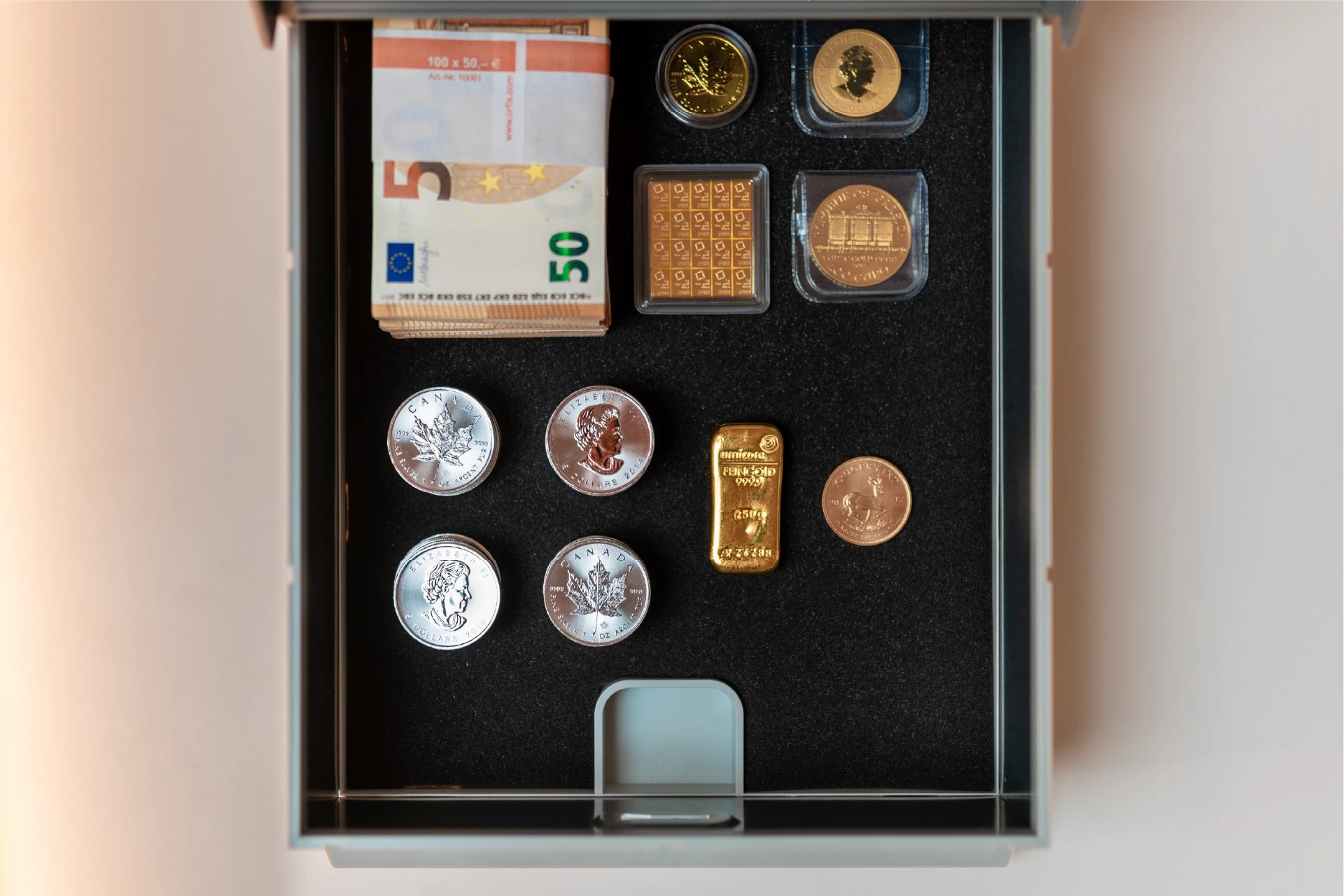
For many investors, physical gold is more than just a line item in a securities account. It is something tangible: a bar, a coin, a value you actually own. For many people, this is precisely the appeal – gold is not just a number on a screen, but a real asset.
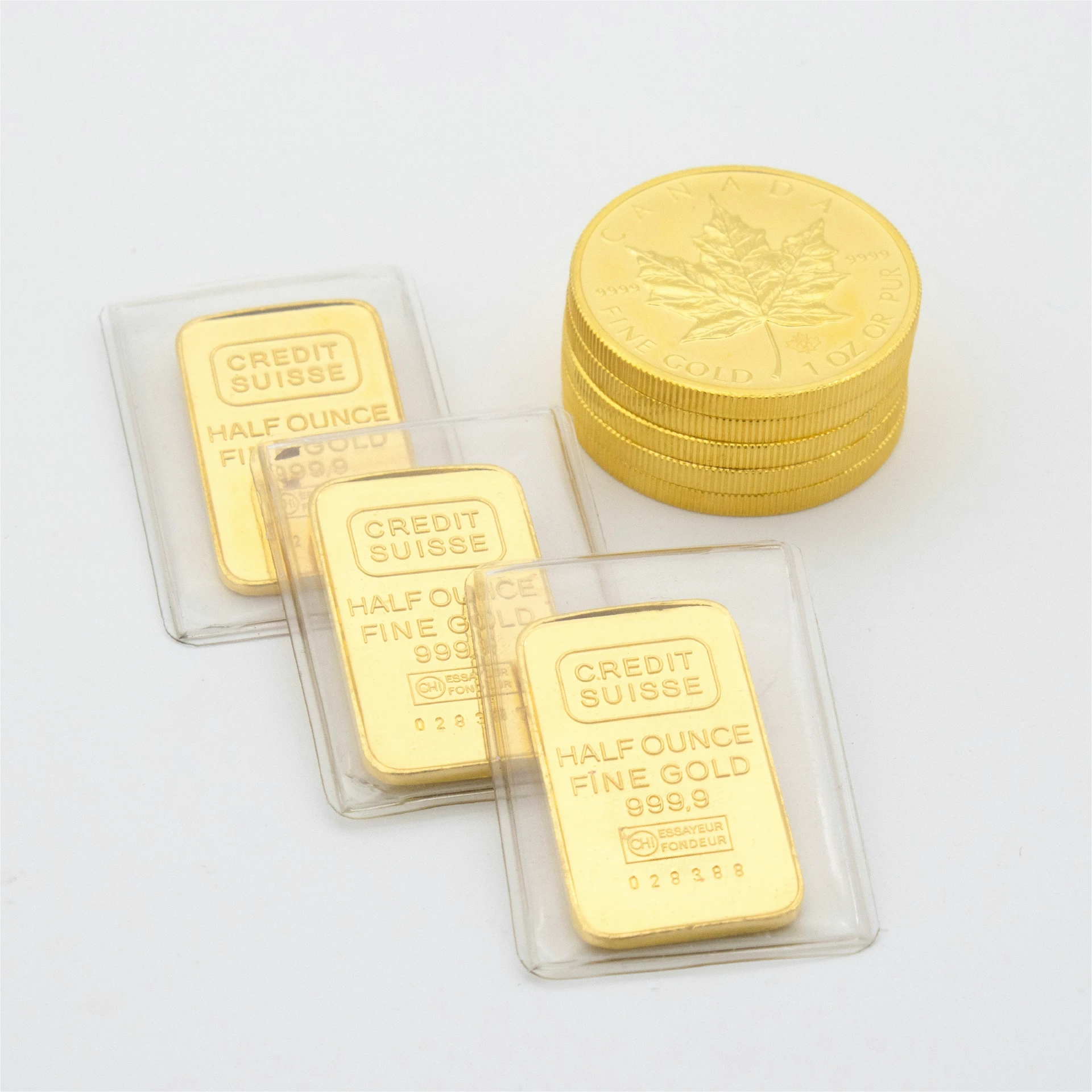
In practice, investors usually buy physical gold in the form of standardized gold bars or well-known investment coins. These include, for example, bars from renowned manufacturers or internationally recognized coins such as Krügerrand, Maple Leaf, Wiener Philharmoniker, or Britannia. Such investment products are designed for tradability: weight, fineness, and origin are clearly defined, which makes later resale or exchange easier.
In addition, there are collector coins, special editions, or historical coins. These can also carry emotional or collector's value. For pure gold investment, however, standardized bars and well-known investment coins are most relevant, as they can be more easily valued and traded worldwide.
The key point: those who own physical gold hold not an abstract claim, but a concrete tangible asset. This, however, also creates responsibility – because real gold must be stored securely.

What Are Gold ETFs, Gold ETCs, and Certificates?
A Gold ETF, Gold ETC, or gold certificate is a digital investment solution. Investors purchase the product through their securities account and thereby participate in the performance of the gold price without having to buy, transport, or store gold themselves.
The major advantage lies in simplicity: Gold ETFs and similar products can be bought and sold quickly during trading hours. For investors who want to add gold tactically, hedge against portfolio fluctuations, or react quickly to price movements, this can be very attractive.
However, the legal structure is important. Many gold products common in Germany are not classic ETFs but ETCs or certificates. Depending on the product, these are debt instruments. This means investors should carefully check who the issuer is, how the product is collateralized, and what rights they actually have in a crisis.

The Most Important Difference: Ownership or Financial Product?
The key question is not only: "How will the gold price develop?" But rather: What do you actually own?
With physical gold, you own actual bars or coins. You can decide for yourself where to store the gold, when to access it, and whether to sell it, give it away, or hold it long-term.
With a Gold ETF, Gold ETC, or certificate, on the other hand, you generally own a financial product that tracks the gold price. Even if a product is physically backed by gold, this does not automatically mean that investors can obtain actual gold bars at any time. In many cases, there is no practical right to delivery in small quantities or for retail investors. In many cases, the product is designed to be bought and sold on the exchange – not to be exchanged for real gold in a crisis.
This is not a disadvantage for every investor. But it is a fundamental difference.
In short: Physical gold is direct ownership. A Gold ETF is a financial product.

Counterparty Risk and Custodian Risk
With a Gold ETF, Gold ETC, or certificate, there is always a structure between the investor and the gold price. Depending on the product, this may include the issuer, custodian, depositary bank, market maker, or other parties. In everyday use, this structure is often unproblematic – it makes the product tradable, digital, and easy to manage.
At the same time, this creates risks that do not exist in this form when owning physical gold directly. Particularly relevant are counterparty risk, issuer risk, and the question of where and how any gold holdings are actually stored.
Physical gold carries no issuer risk. It does not depend on whether a particular provider, product structure, or security functions properly. However, this creates a different risk: those who own real gold must decide for themselves how it is protected and stored.
Systemic Dependency vs. Physical Independence
Gold ETFs and similar products are especially practical as long as financial markets, exchange trading, account access, and banking infrastructure function normally. In that case, they can be traded quickly, managed easily, and conveniently integrated into an existing investment strategy.
Physical gold works differently. It does not depend to the same extent on a securities account, an issuer, or exchange infrastructure. This is precisely why many investors deliberately choose real gold – as a long-term reserve, as a tangible asset, and as a complement outside classic financial products.
However, this independence has a downside: those who own physical gold also bear the ownership risk. Gold can be stolen, lost, or improperly stored. That is why the decision to hold physical gold always includes the question of proper custody.

Liquidity in Normal Times and in a Crisis
In a normal market environment, Gold ETFs, Gold ETCs, and certificates are often highly liquid. They can be traded through a securities account during trading hours. For short-term strategies, tactical additions, or quick reallocations, this is a clear advantage.
Physical gold is also tradable, but generally less spontaneously. Sale, verification, transport, and purchase conditions play a larger role. On the other hand, physical gold is not limited to exchange trading. Especially in uncertain times, direct ownership can be more important to some investors than daily tradability.
The decision therefore depends heavily on what you want to achieve with gold: fast price participation or long-term, physical substance.

When Can a Gold ETF Make Sense?
A Gold ETF, Gold ETC, or similar product can make sense when gold is primarily meant to be used as part of a digital investment strategy. Those who want to hedge their portfolio against fluctuations, add gold tactically, or react flexibly to market movements benefit from the fast tradability through a securities account.
A Gold ETF can be a good fit if:
Gold is part of an investment strategy
Fast buying and selling options are important
No physical custody risk is desired
The extra effort of purchase, transport, and storage should be avoided
Ultimately, a Gold ETF is primarily a digital investment decision. It suits investors who are seeking gold price exposure and who can reconcile the product structure with their personal risk tolerance.
When Can Physical Gold Make Sense?
Physical gold can make sense when what matters is not only price performance, but direct ownership. It is a real asset – durable, recognized worldwide, and independent of any particular currency or digital account structure.
Physical gold can be a good fit if:
Real ownership matters more than pure price tracking
Gold is meant to be held long-term
A currency-independent tangible asset is desired
Emotional value, collector's value, or passing it on to others plays a role
Physical gold is not automatically the more convenient solution. But it is the more direct one. Anyone who chooses it should think about security and storage from the very beginning.
Comparison: Physical Gold and Gold ETF
Physical gold and Gold ETFs pursue the same goal – protection against inflation and currency risk. However, they differ fundamentally in structure, risk, and practical handling. The following comparison shows what matters.
Physical Gold
CRITERION
Gold ETF / ETC / Certificate
Direct ownership of gold
Basic Concept
Participation in the gold price performance
Bars, investment coins, collector coins
Form
Security held in a securities account
Physically possible
Access
Generally sold via exchange/securities account
Gold is already there
Exchange for Gold
Delivery often not provided for or heavily restricted
Sale via dealers or buyers
Liquidity
Very quickly tradable via exchanges
Theft, loss, and custody risk
Risk
Product, issuer, and market risk depending on structure
Purchase, transport, and secure storage required
Effort
Simple purchase and sale via the securities account
High, as real ownership and collector's value are possible
Emotional Component
Low, as it is a digital financial product
Long-term tangible-asset reserve and physical independence
Suitable For
Tactical addition and portfolio management
Physical Gold
CRITERION
Gold ETF / ETC / Certificate
Direct ownership of gold
Basic Concept
Participation in the gold price performance
Bars, investment coins, collector coins
Form
Security held in a securities account
Physically possible
Access
Generally sold via exchange/securities account
Gold is already there
Exchange for Gold
Delivery often not provided for or heavily restricted
Sale via dealers or buyers
Liquidity
Very quickly tradable via exchanges
Theft, loss, and custody risk
Risk
Product, issuer, and market risk depending on structure
Purchase, transport, and secure storage required
Effort
Simple purchase and sale via the securities account
High, as real ownership and collector's value are possible
Emotional Component
Low, as it is a digital financial product
Long-term tangible-asset reserve and physical independence
Suitable For
Tactical addition and portfolio management

When Owning Gold Becomes a Storage Question
The decision to hold physical gold does not end with the purchase. Once gold is actually in your possession, a very practical question arises: Where do you store it so that it is protected from unauthorized access – yet remains accessible when you need it?
At home, gold is often closer at hand, but not necessarily safer. The higher the value, the more important protection against burglary, unauthorized access, loss, and organizational risks becomes. At the same time, many investors do not want to give up flexibility.
Trisor combines exactly these two requirements: security and flexible access. In a bank-independent safe deposit box, you can store physical gold outside your home and, depending on your plan, access it around the clock – without an appointment.

Which Gold Investment Suits Which Goal?
Physical gold and Gold ETFs serve different purposes. A Gold ETF is convenient, quickly tradable, and well suited for incorporating gold digitally into an investment strategy. Physical gold is more direct, tangible, and independent – but it requires well-thought-out storage.
Anyone who wants to use gold only as a short-term position in their securities account can work well with a Gold ETF. Anyone who wants to own gold as a long-term tangible asset should also consider secure storage.
At Trisor, we are happy to advise customers in free consultations on the options available for the secure storage of physical gold and what to look out for when choosing a safe deposit box.