
Gold as an Inflation Hedge: What the Data Really Shows
Few claims about gold are repeated as often as this one: "Gold protects against inflation." A look at the relationship between gold and inflation over several decades – from a German perspective – paints a more nuanced picture: gold can preserve purchasing power, but not automatically, and not in every period. Understanding that distinction leads to better decisions about gold as an inflation hedge.
What German Purchasing-Power Data Shows
The Bundesbank documents the erosion of money's value since 1810 in its purchasing-power equivalents. A recent example: since the euro was introduced in 2002, money in Germany has lost roughly a third of its real purchasing power – 100 euros from 2002 are worth only about 67 euros in real terms today. Over very long periods, gold has not just offset such losses but clearly outpaced them: globally, gold's nominal value has grown by around 4.2 percent per year over roughly 100 years, or about 0.6 percent per year after inflation. What matters is the path getting there – and it was anything but a straight line.
The 1980s: Moderate German Inflation, a Collapsing Gold Price
Unlike in the US, inflation in Germany never reached double digits in the early 1980s: it stood at 5.4 percent in 1980 and 6.3 percent in 1981 – high by German standards, but far from a crisis. The Bundesbank nonetheless responded decisively, raising its discount rate to as high as 7.5 percent, a historic high. German gold investors felt the consequences too: the gold price, which had peaked at around 850 US dollars per fine ounce in January 1980, fell to about 305 US dollars by 1985. Even converted into Deutsche Mark – despite a significantly stronger dollar over the same period – that amounted to a drop from roughly 1,650 to about 1,000 DM per fine ounce, a decline of around 40 percent. Anyone who bought gold in 1980 lost significant purchasing power, even though German inflation at the time remained comparatively moderate.
Short-Term Hedge vs. Long-Term Preservation of Purchasing Power
The relationship between gold and inflation is statistically weak over short periods. Global research from the World Gold Council – based on US inflation data, the longest available dataset – shows that only around 16 percent of gold price movements since 1971 can be explained by changes in inflation. Over a horizon of a few years, gold is therefore an unreliable inflation hedge. Over very long periods of 20 years or more, the relationship tends to hold up better – and this applies to the euro area in much the same way as it does to the dollar area.
The Real Driver: Real Interest Rates
What moves the gold price more strongly than the inflation rate itself, over the short to medium term, are real interest rates – the interest rate minus inflation. A recent German example: in 2022, German inflation stood at 6.9 percent, while the yield on ten-year German government bonds remained far below that – pushing the real yield to an estimated minus 6 percent. In that same period, the euro gold price hit a new all-time high in March 2022. The reverse also holds: when real rates rise sharply, as they did through the Bundesbank's rate hikes from 1980 onward, gold comes under pressure – even while inflation remains elevated.
Conclusion: Part of a Protection Mix, Not a Cure-All
Bundesbank purchasing-power data illustrate the same mechanism from a different angle: gold has clearly more than offset Germany's purchasing-power loss since 2002 – but not evenly, and not without multi-year losing streaks like the one in the 1980s. Anyone buying gold as a short-term hedge against the next German inflation report is overestimating its effect. Anyone using it as one of several building blocks for long-term wealth preservation is on historically solid ground.
Anyone deciding to buy physical gold based on this assessment should next consider how to store it securely: more on that in our guide to gold storage.
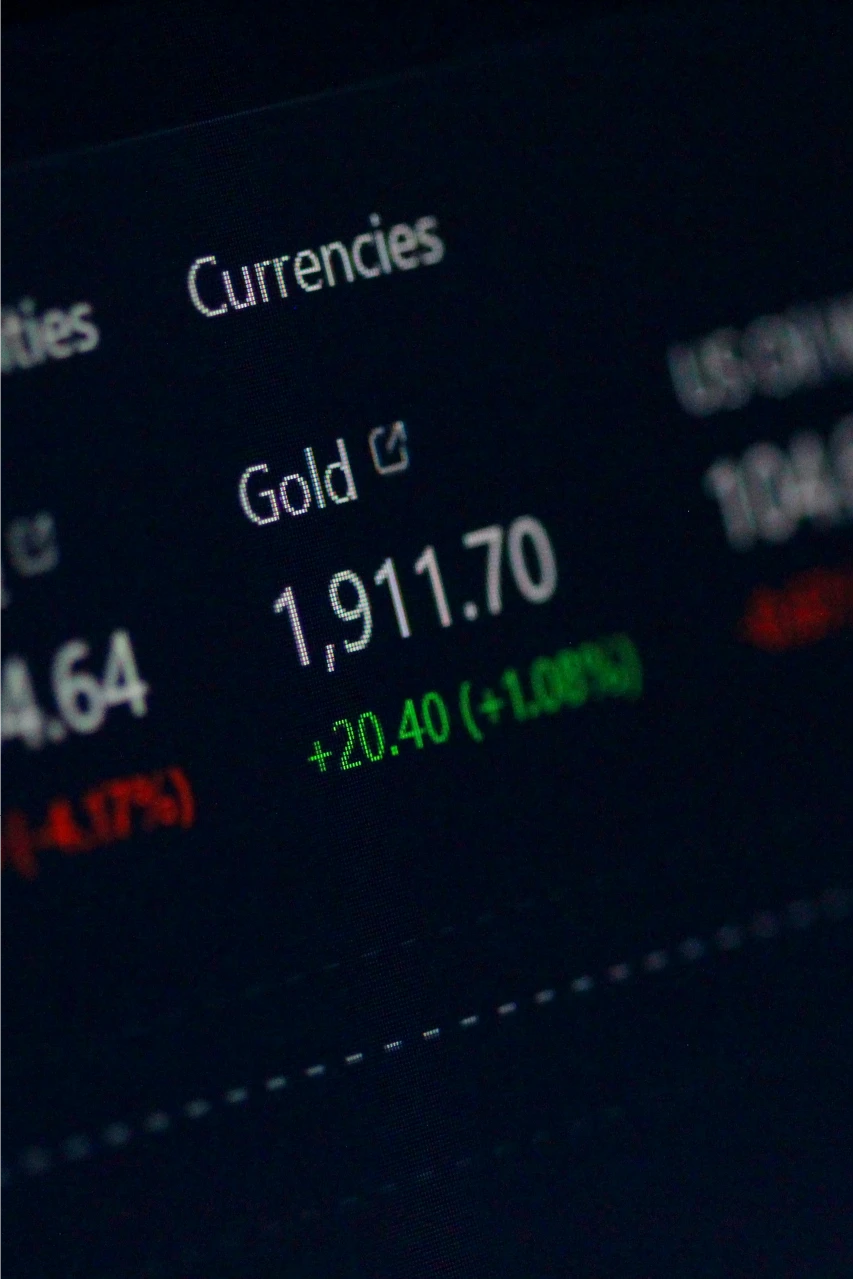
Gold Price Trends Explained: The Structural Drivers at a Glance
Gold price trends explained: how real interest rates, central bank policy, the dollar, geopolitics and supply interact – with current data from the World Gold Council and Bundesbank.
Gold as an Inflation Hedge: What the Data Really Shows

Buying Silver: Why You Pay VAT – But Not on Gold
Gold Price Trends Explained: The Structural Drivers at a Glance
Gold as an Inflation Hedge: What the Data Really Shows