
How to Store Jewelry Safely – Protecting Its Value and Beauty
Whether it is an engagement ring, a family heirloom, or a gold necklace reserved for special occasions, valuable jewelry often spends far more time in storage than it does being worn. That makes proper storage essential. Scratches, moisture and dust can all affect jewelry over time, while risks such as theft, fire and water damage become increasingly important for valuable collections.
Storing jewelry safely helps preserve not only its financial value but also the memories and emotions often attached to individual pieces.
Why Proper Jewelry Storage Matters
Fine jewelry is often passed down through generations. At the same time, it is one of the asset classes most susceptible to everyday damage.
Chains become tangled, gemstones rub against one another, silver tarnishes and delicate surfaces can become scratched. Many people also store jewelry in convenient locations that are not ideal for long-term preservation.
Proper storage helps maintain the condition of jewelry and protects its value over time.
The Most Important Rules for Storing Jewelry at Home
If you want to store jewelry at home, there are a few basic principles worth following.
Store Pieces Separately
One of the most common mistakes is keeping different jewelry items together in the same drawer or box. Diamonds and other hard gemstones can scratch softer metals and surfaces.
Jewelry boxes with individual compartments are often the best solution for preventing damage.
Avoid Moisture
Moisture is one of the biggest threats to many types of jewelry. Silver jewelry in particular can tarnish over time when exposed to humid conditions.
Bathrooms are therefore rarely the ideal storage location. Dry rooms with a stable climate are usually a better choice.
Clean Jewelry Before Long-Term Storage
Residues from skin oils, cosmetics and perfume can affect materials over time. Before storing jewelry for extended periods, it is worth cleaning it carefully.
In many cases, a soft microfiber cloth is sufficient to remove everyday dirt and residue.
Protect Jewelry from Direct Sunlight
Some gemstones are sensitive to UV radiation and excessive heat. Closed storage helps protect jewelry not only from dust but also from unnecessary light exposure.
How to Store Gold, Silver and Gemstone Jewelry
Different types of jewelry require different storage conditions.
Storing Gold Jewelry
Gold is relatively resistant to corrosion and tarnishing. However, gold rings, necklaces and bracelets can still scratch one another, making separate storage advisable.
Storing Silver Jewelry
Silver reacts to air and moisture. To prevent tarnishing, silver jewelry should be stored in dry conditions and protected from humidity whenever possible.
Storing Jewelry with Gemstones
Diamonds are among the hardest natural materials on Earth. Ironically, that makes them capable of damaging other jewelry pieces when stored together.
High-value gemstone jewelry should therefore be stored individually.
Pearls and Delicate Jewelry
Pearls require more care than many other jewelry types. They can be sensitive to temperature fluctuations, direct sunlight and unsuitable storage conditions.
Proper storage helps preserve their appearance and longevity.
The Most Common Jewelry Storage Mistakes
Many jewelry-related issues are caused by small mistakes rather than major incidents. Common examples include: storing jewelry loose in drawers, keeping jewelry in the bathroom, storing different pieces together, storing jewelry without cleaning it first, leaving valuable jewelry openly visible.
Avoiding these mistakes can significantly extend the lifespan of jewelry.
When Home Storage Reaches Its Limits
For everyday jewelry, a quality jewelry box is often sufficient. However, the situation changes when dealing with heirlooms, diamond jewelry or larger collections.
At that point, risks such as theft, fire and water damage become increasingly important.
Many owners also underestimate the emotional value of their jewelry. A family heirloom may be impossible to replace, even if its financial value is insured.
A home safe can provide additional protection. However, even high-quality residential safes generally do not offer the same level of security as a professional safe deposit box.
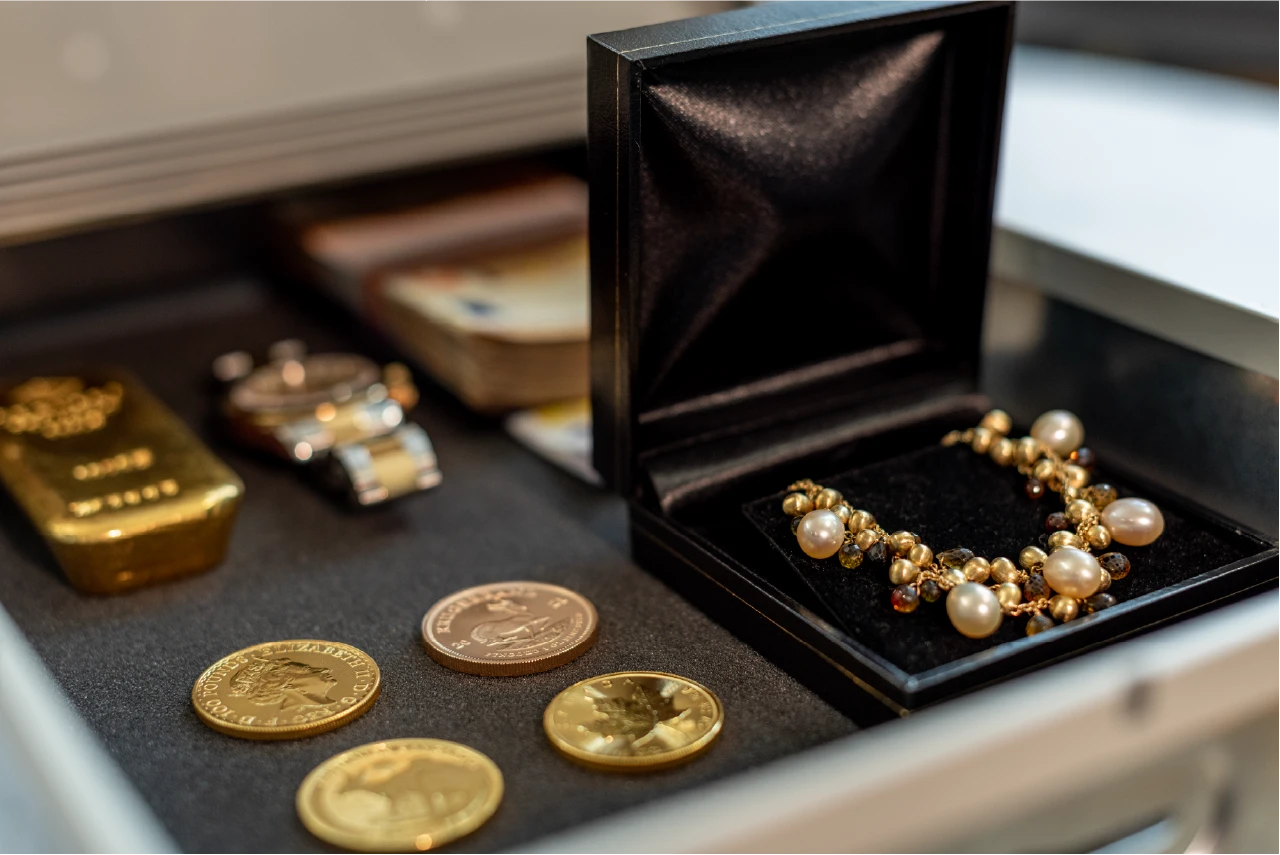
At What Value Should Jewelry Be Stored Outside the Home?
There is no universal threshold. Emotional value often matters just as much as financial value.
- For collections under EUR 5,000, the decision is highly personal.
- Between EUR 5,000 and EUR 20,000, external storage becomes increasingly attractive.
- At approximately EUR 20,000 to EUR 30,000 and above, many owners consider professional storage.
- At EUR 50,000 or more, the cost of professional storage becomes almost negligible.
The key consideration is not only replacement cost but also whether a loss could truly be compensated at all.
Storing Jewelry Together with Other Valuables
Many people store jewelry alongside luxury watches, precious metals and important documents. Luxury watches require similar protection against damage, moisture and theft.
More: How to store luxury watches in a safe deposit box
Conclusion: Safe Jewelry Storage Is About More Than Organization
Proper jewelry storage protects more than just surfaces and materials. It helps safeguard significant financial assets, treasured memories and family heirlooms.
For everyday jewelry, a quality storage solution and a few basic precautions are often enough. As value increases, however, security considerations such as theft protection, fire protection and long-term preservation become increasingly important. Taking these factors into account helps ensure that valuable jewelry remains in excellent condition for years to come.

Gold Price Trends Explained: The Structural Drivers at a Glance
Gold price trends explained: how real interest rates, central bank policy, the dollar, geopolitics and supply interact – with current data from the World Gold Council and Bundesbank.
Gold as an Inflation Hedge: What the Data Really Shows

Buying Silver: Why You Pay VAT – But Not on Gold
Gold Price Trends Explained: The Structural Drivers at a Glance
Gold as an Inflation Hedge: What the Data Really Shows