
Inheriting and gifting gold: what families should keep in mind
In many families, gold is passed down through generations – both as an asset and as a matter of trust. Anyone wishing to inherit or gift gold should clarify ownership, documentation and tax obligations early on. This page provides a factual overview of the key questions surrounding gold in an estate, gifting, allowances and secure storage.
This page does not replace tax or legal advice. Trisor helps with questions about secure storage and access arrangements, not with tax structuring. For individual questions, we recommend consulting a tax advisor or notary.


Gold is often thought of across generations
For many people, gold is more than an investment. It stands for security, preserving value, and the idea of passing on wealth across generations – which is exactly why passing it on shouldn't be an afterthought. Many gold owners buy gold not only for themselves, but also with their family, security and future generations in mind.
According to the 2024 Reisebank Gold Study, nearly 40 percent of adults in Germany own gold in the form of bars or coins as a physical investment. The study also shows that gold is perceived as protection against inflation and as real value across different age, income and wealth groups.
According to the same study, almost half of German gold owners inherited their gold or received it as a gift. At the same time, 81.9 percent want to keep their gold.
For many people, gold is therefore not a short-term investment product but an asset of family significance that is passed down through generations and rarely sold.

Gold is part of the estate, just like other assets
Inheriting gold is not a special case outside the estate. Physical gold – bars, coins or other precious metal assets – generally forms part of the deceased's estate and must be taken into account accordingly in the event of inheritance.
For tax valuation purposes, § 12 ErbStG refers to the valuation rules of the German Valuation Act (Bewertungsgesetz). What matters is the so-called "gemeiner Wert" (fair market value) – i.e. the market value at the valuation date, not the original purchase price. This means: gold acquired years ago at a significantly lower price is assessed at its current market value in the event of inheritance. Given rising gold prices, this can result in a considerably higher taxable value than at the time of the original purchase.
It is therefore important for heirs to clarify several questions early on:
What gold holdings exist?
Where are they stored?
Who clearly owns them?
Are there purchase receipts or proof of origin?
Is there documentation of the value?
Who is allowed to access the safe deposit box in the event of inheritance?

What allowances apply to gold?
For gold, the general allowances of the Inheritance and Gift Tax Act apply in cases of inheritance and gifting. Gold does not have its own special exemption threshold. Under § 16 ErbStG, the following personal allowances apply, among others:
| Relationship to the donor/testator | Allowance under § 16 ErbStG |
|---|---|
| Spouse / registered partner | €500,000 |
| Child | €400,000 |
| Grandchild, if the parents are still alive | €200,000 |
| Grandchild, if the parents have already died | €400,000 |
| Parents / grandparents in case of inheritance | €100,000 |
| Other persons | €20,000 |
Important: the €20,000 is not the general gift tax exemption threshold, but the allowance for certain groups of recipients – in particular more distant relatives or unrelated persons. Significantly higher allowances apply to spouses, children and grandchildren. These allowances have remained unchanged since 2009 (as of 2026).
Gifting gold: plan ahead, document properly
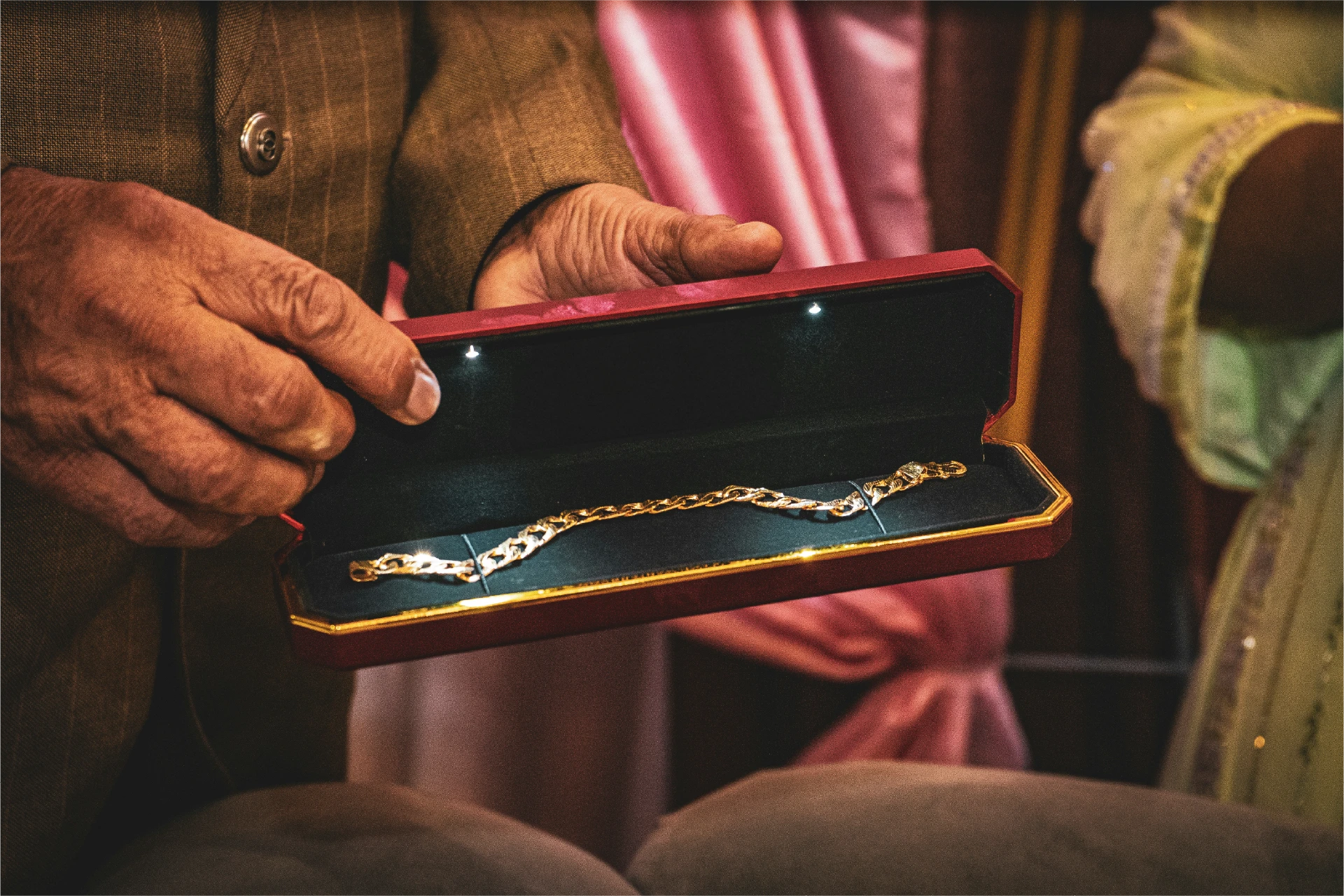
Gold can also be gifted during one's lifetime. In this case, gift tax rules apply. Multiple acquisitions from the same person within ten years are aggregated under § 14 ErbStG – this is a statutory rule and applies regardless of the parties' intentions. A gift should always be clearly documented and handled correctly for tax purposes. This includes:
Documenting the date of handover
Clearly naming the persons involved
Recording the type and quantity of gold
Determining the value at the time of the gift in a verifiable way
Keeping purchase receipts and proof of origin
Clarifying tax obligations with a tax advisor or the tax office
Anyone gifting gold should not think only of the material possession. Traceability, documentation and the correct tax classification are equally important. Especially for higher gold values, it is advisable to consult a tax advisor or notary.

Tax obligations should not be underestimated
Inheritances and gifts are generally subject to a reporting obligation. Under § 30 ErbStG, an acquisition must be reported to the competent tax office within three months of becoming aware of it. In the case of gifts, the reporting obligation can apply to both the recipient and the donor. Anyone who inherits gold or receives it as a gift should always clarify the tax classification with a tax advisor, notary or the competent tax office.

Origin, purchase receipts and proof of value create clarity
Gold is physical, compact and often kept within a family for many years. This is precisely why clear documentation is important. Without records, uncertainties can arise in the event of inheritance: does the gold belong to one person alone or to several family members? When was it purchased? What was its value at the time of handover or inheritance? Is there proof of origin? Sensible documentation can include:
Purchase receipts and invoices
Photos of the bars or coins
Weight, denomination and fineness
Serial numbers, if available
Storage location
Gift note or handover record
Contact details of the tax advisor or notary
Instructions for family members on access in an emergency
A practical additional point for heirs: if gold is inherited and later sold, the heir often takes over the deceased's previous holding period for the tax holding period. Private gold sales are generally tax-free after a holding period of more than twelve months – for heirs, this period therefore does not start again but is carried over.
What happens to gold in a safe deposit box?
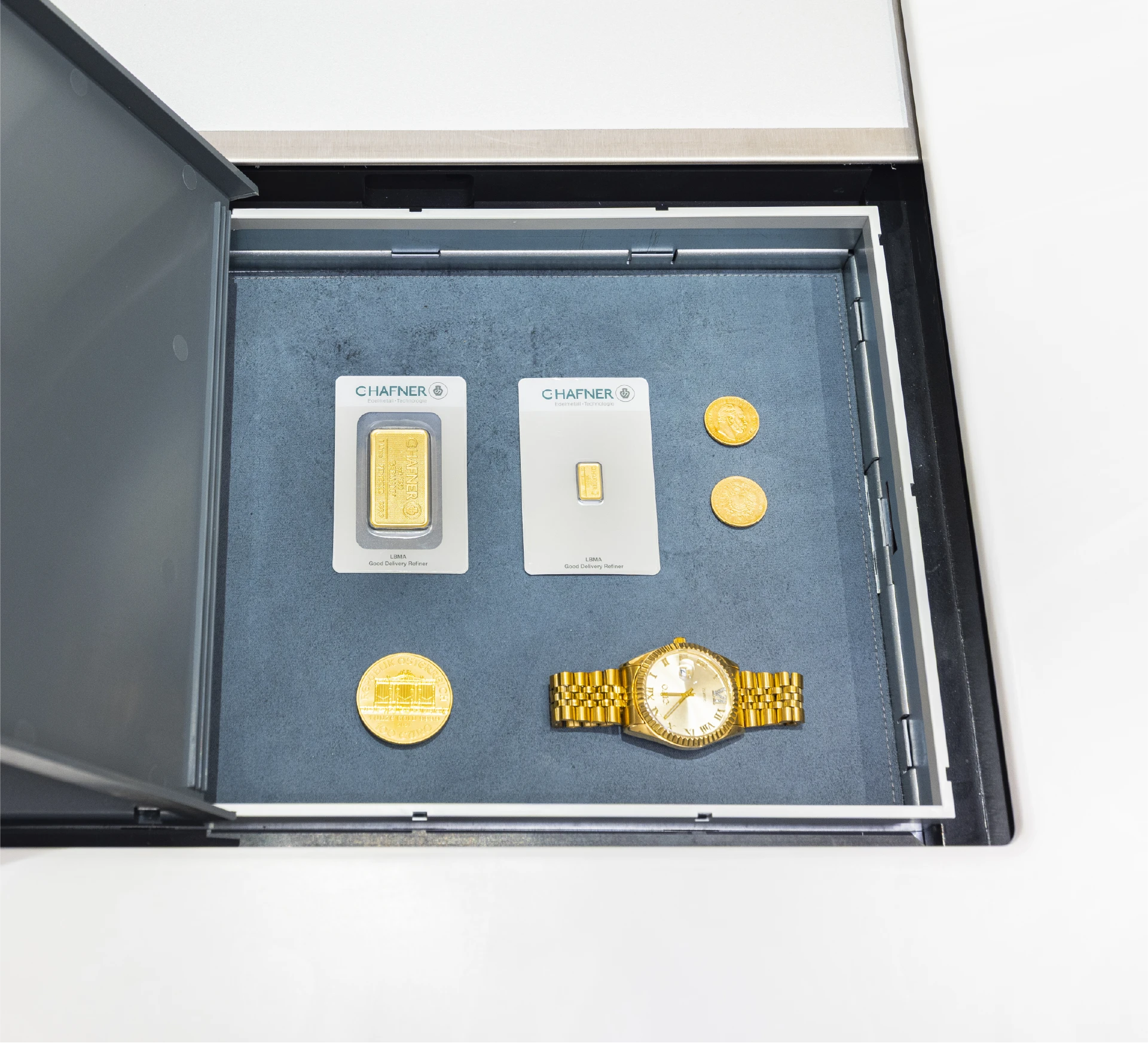
When gold is kept in a safe deposit box, it is not only ownership of the gold that matters, but also the question of access. In an emergency, family members should know that a safe deposit box exists, where it is located, and which documents are needed for access.
Anyone storing gold in a safe deposit box should not leave access arrangements until the point of inheritance. It makes sense to set out early on who should be able to act in an emergency or after death – legally sound, documented and in line with personal estate planning. We explain in detail how access rights to a safe deposit box can be set up in practice – for example via trusted persons or co-users – in our guide to estate and succession planning.

Storage is part of estate planning
Anyone wishing to inherit or gift gold should also consider its storage. The higher the value of the gold, the more important security, insurance, access and documentation become.
At home: Immediately available, but with increased risk from burglary, loss, fire or water damage.
Bank safe deposit box: Classic solution, but often dependent on bank opening hours, account ties or availability.
Trisor safe deposit box: Storage independent of banks with 24/7 access, a private individual cabin, and up to five trusted persons with access.
Passing on gold means passing on responsibility
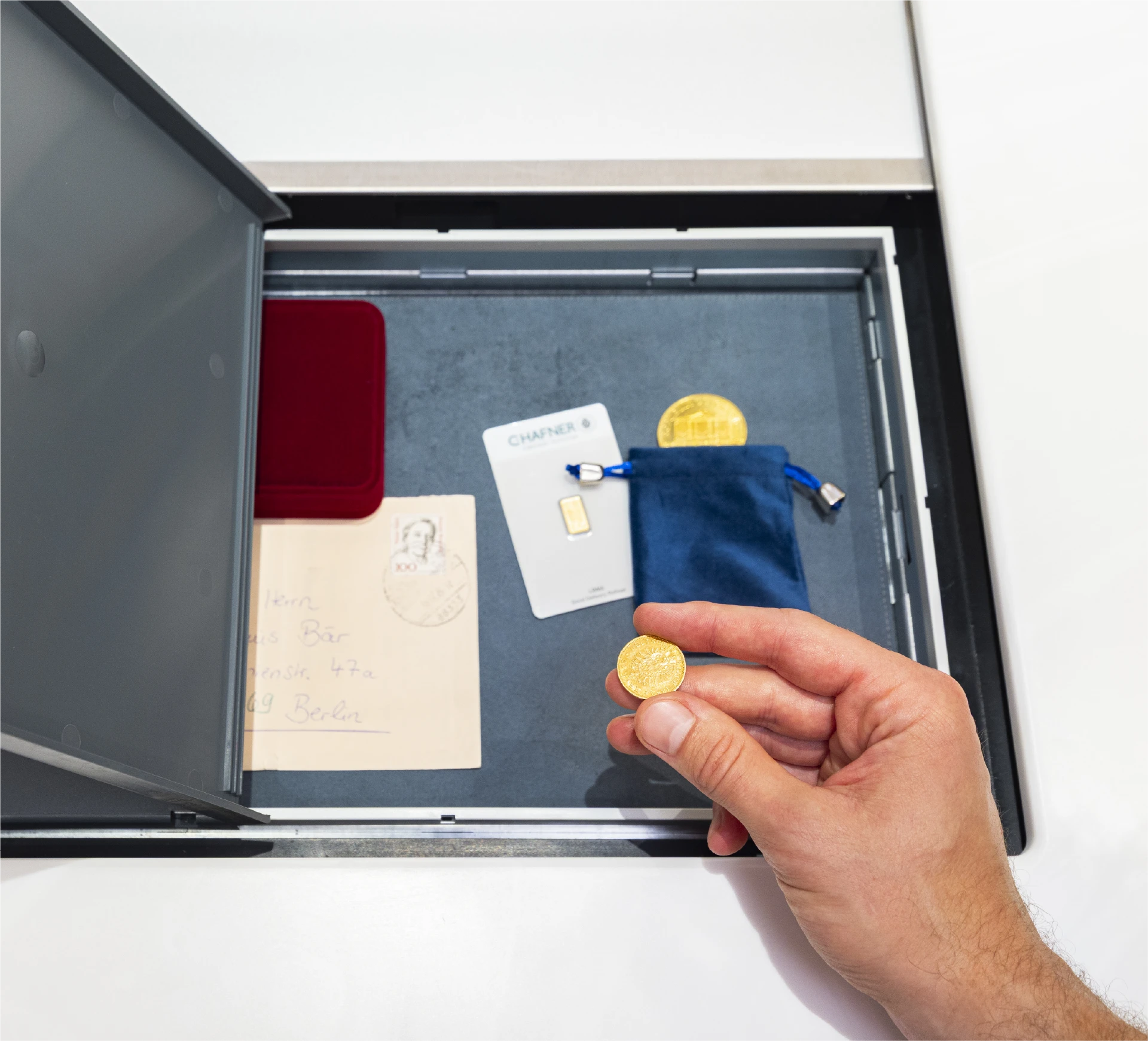
Gold is often bought with a long-term perspective: as a safeguard, as a store of value, as part of family wealth. Anyone wishing to pass gold on to the next generation therefore passes on not only possession, but also knowledge and order. Anyone who answers these questions for themselves early on saves their family members a great deal of uncertainty in an emergency:
Why was the gold bought?
Where is it stored?
What documents belong with it?
Who knows about it in an emergency?
What tax or legal questions need clarifying?
How can access be organized securely and traceably?
It is about responsibility, provision and clarity.

Store gold securely and arrange access early
Trisor helps you store gold and important documents securely – independent of banks, flexible, and with clearly configurable access rights.
Safe deposit box independent of banks
24/7 access
Private individual cabin
Personal on-site consultation

Inheriting or gifting gold: secure, traceable, legally sound
Gold can be an important part of family wealth planning. However, anyone wishing to inherit or gift gold should not think only of its material value. What matters is clear ownership, traceable documentation, tax review and secure storage. Especially with physical gold: the better handover, documentation and access are arranged, the easier it becomes for family members in an emergency. Trisor offers a secure storage solution for this and provides support with questions around safe deposit box access, co-users and estate planning.