
Safe deposit box with integrated insurance – security on two levels
A modern safe deposit box not only protects against unauthorised access, but also provides additional financial protection for your assets. Trisor's integrated supplementary insurance protects against burglary, robbery and fire, among other things – flexibly up to €500,000.
Are safe deposit boxes automatically insured?
Usually yes – but only to a limited extent.
Many people assume that the contents of a safe deposit box are fully insured. In reality, however, insurance cover and liability differ considerably depending on the provider – with classic bank safe deposit boxes, fixed standard limits or individual contract terms often apply.
How important this topic is was recently highlighted by the break-in at a Sparkasse branch in Gelsenkirchen, which affected thousands of boxes: many customers had assumed significantly higher insured sums.
Before storing valuables, it is worth clarifying the following questions:
What prospective customers most want to know

Over 60% of our customers increase their protection beyond the basic cover.
Why safe deposit box insurance pays off
Those who store valuables pursue a clear goal: to protect them long-term – against as many risks as possible.
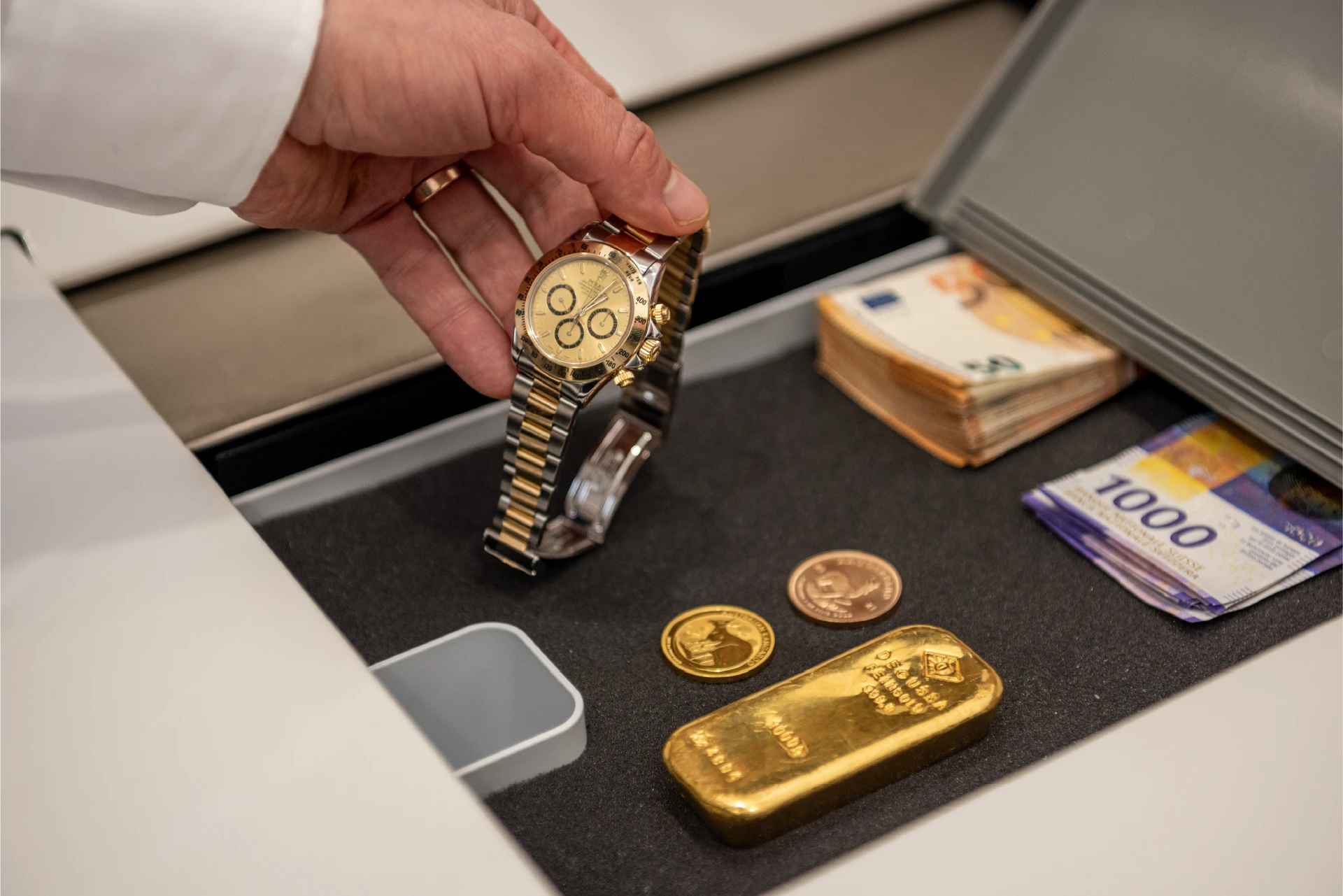
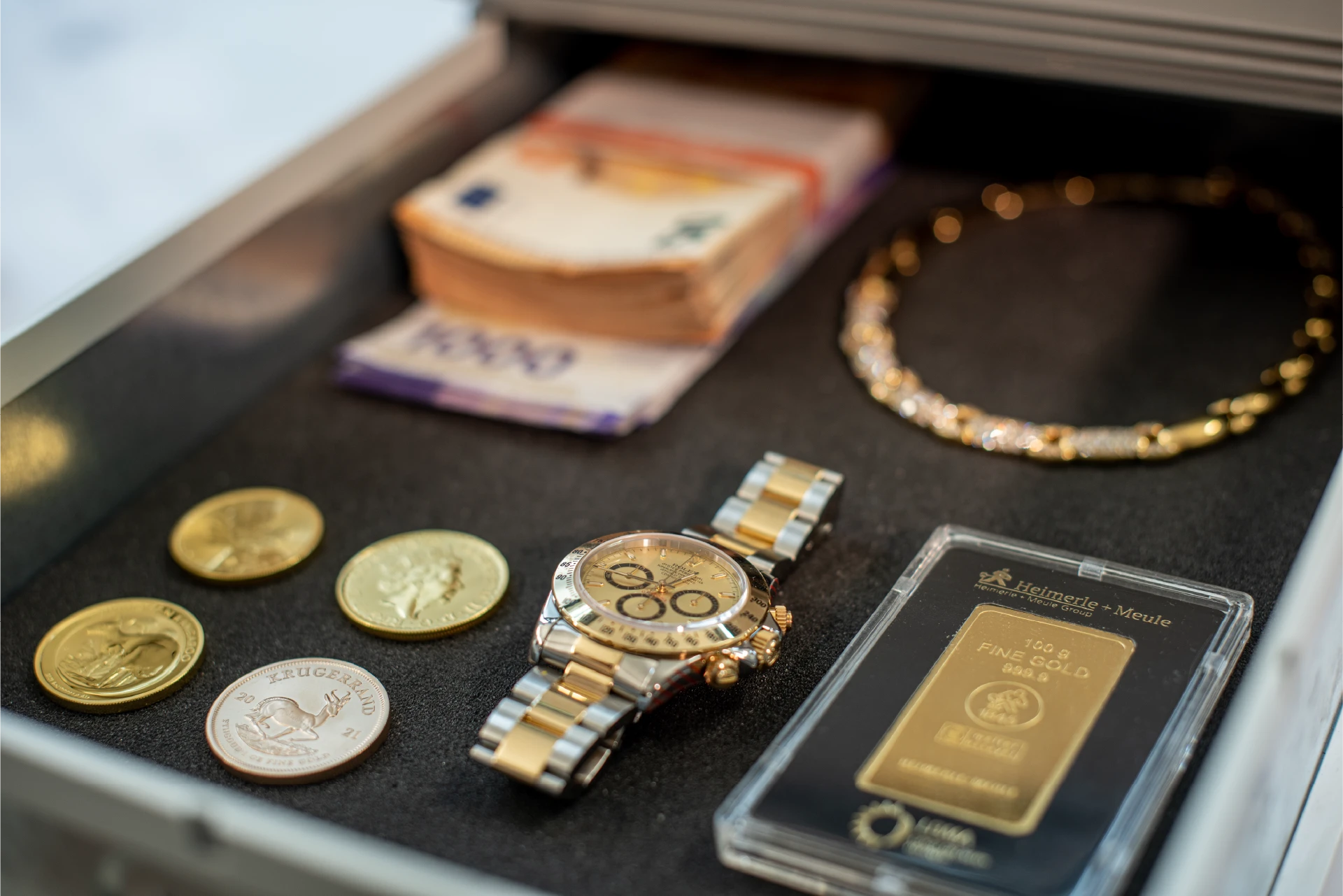
A high-security safe deposit box significantly reduces the risk of unauthorised access. Nevertheless, a complete security strategy also includes financial protection in the event of a claim. This is exactly where safe deposit box insurance comes in. The combination of physical security and additional insurance cover creates a second layer of protection for particularly valuable or personal items – including:
Gold & precious metals
High values, sharply risen prices – coverage at current value particularly relevant.
Jewellery & luxury watches
Often unique pieces with emotional and material value.
Important documents
Certificates, wills, contracts – difficult or impossible to replace.
Collector's items & heirlooms
Rare objects whose value can hardly be reconstructed retrospectively.
Sensitive storage media
USB sticks or hard drives protected as physical objects.
Cash
Covered at Trisor – often excluded at banks.
Why safe deposit box insurance pays off
Those who store valuables pursue a clear goal: to protect them long-term – against as many risks as possible.
A high-security safe deposit box significantly reduces the risk of unauthorised access. Nevertheless, a complete security strategy also includes financial protection in the event of a claim. This is exactly where safe deposit box insurance comes in. The combination of physical security and additional insurance cover creates a second layer of protection for particularly valuable or personal items – including:
Gold & precious metals
High values, sharply risen prices – coverage at current value particularly relevant.
Jewellery & luxury watches
Often unique pieces with emotional and material value.
Important documents
Certificates, wills, contracts – difficult or impossible to replace.
Collector's items & heirlooms
Rare objects whose value can hardly be reconstructed retrospectively.
Sensitive storage media
USB sticks or hard drives protected as physical objects.
Cash
Covered at Trisor – often excluded at banks.
Your Insurance Coverage – Broadly Protected, Clearly Defined
At Trisor, insurance is built directly into the pricing structure — no separate contract, no additional waiting period. Your safe deposit box is insured on an All-Risk basis, meaning coverage is not limited to a fixed list of individual perils.
In principle, any physical loss of or damage to the stored valuables is covered.
Covered risks include, for example:
Depending on the tariff, coverage can be flexibly increased up to €500,000. Coverage is provided through a consortium of renowned insurers, including HDI and Chubb.
A small number of clearly defined cases are excluded from coverage — for example, intentionally caused damage, normal wear and tear, war and sanction-related risks, or pure data loss. For further details or questions, we're happy to help in a consultation or by email at versicherung@trisor.de.
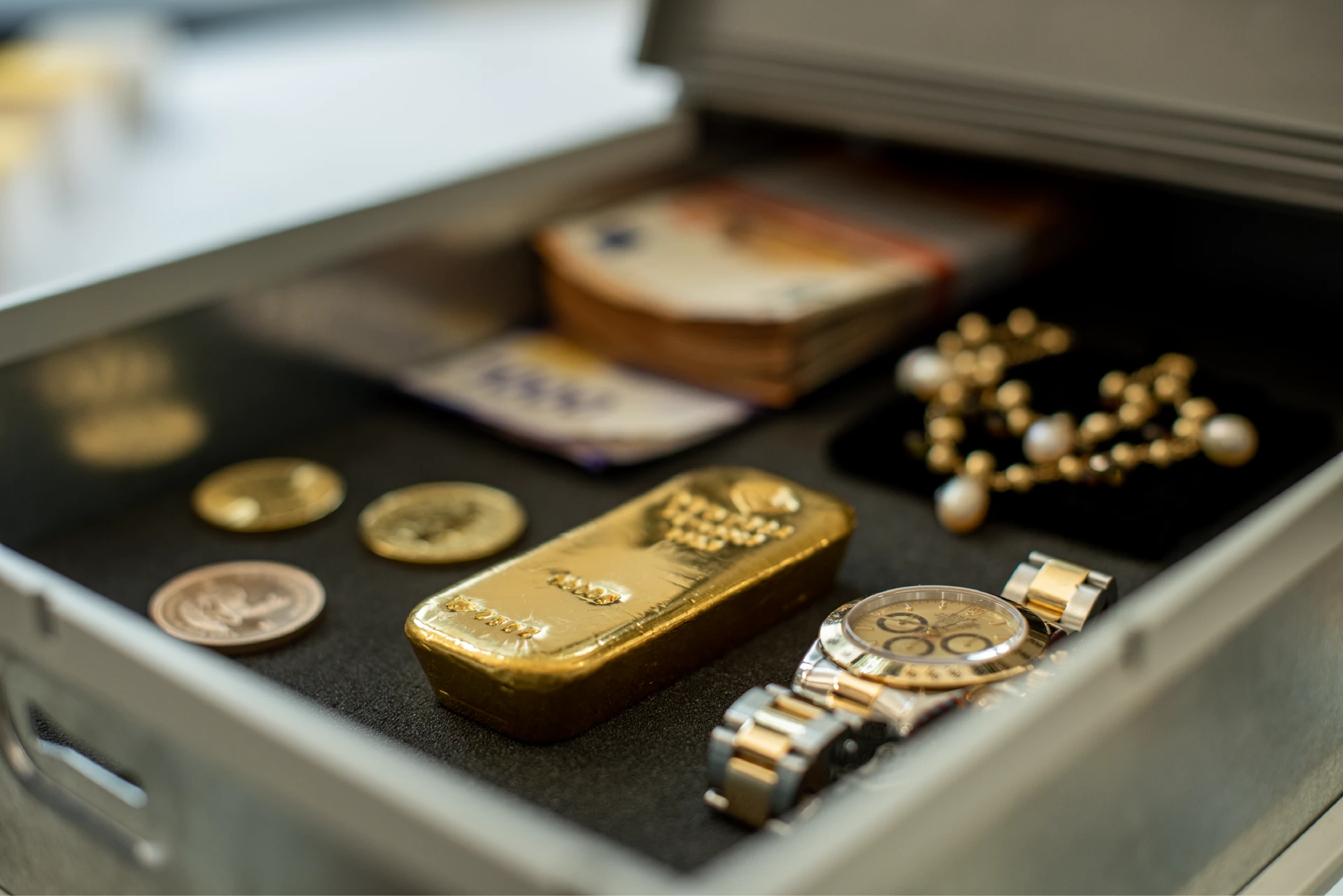
Transparently calculated – adjustable at any time
Depending on the tariff, each safe deposit box can be insured for up to €500,000. The insurance premium is 0.15% per year of the chosen insured sum plus insurance tax. You can adjust your individual sum at any time – without a new contract commitment and without waiting time.
Example: for an additional insured sum of €50,000, that's €6.70 per month.
Calculate your individual premium:
5.000 €
500.000 €
50.000 €
Monthly insurance fee:
6,70 €
Monthly insurance fee:
What happens in the event of a claim
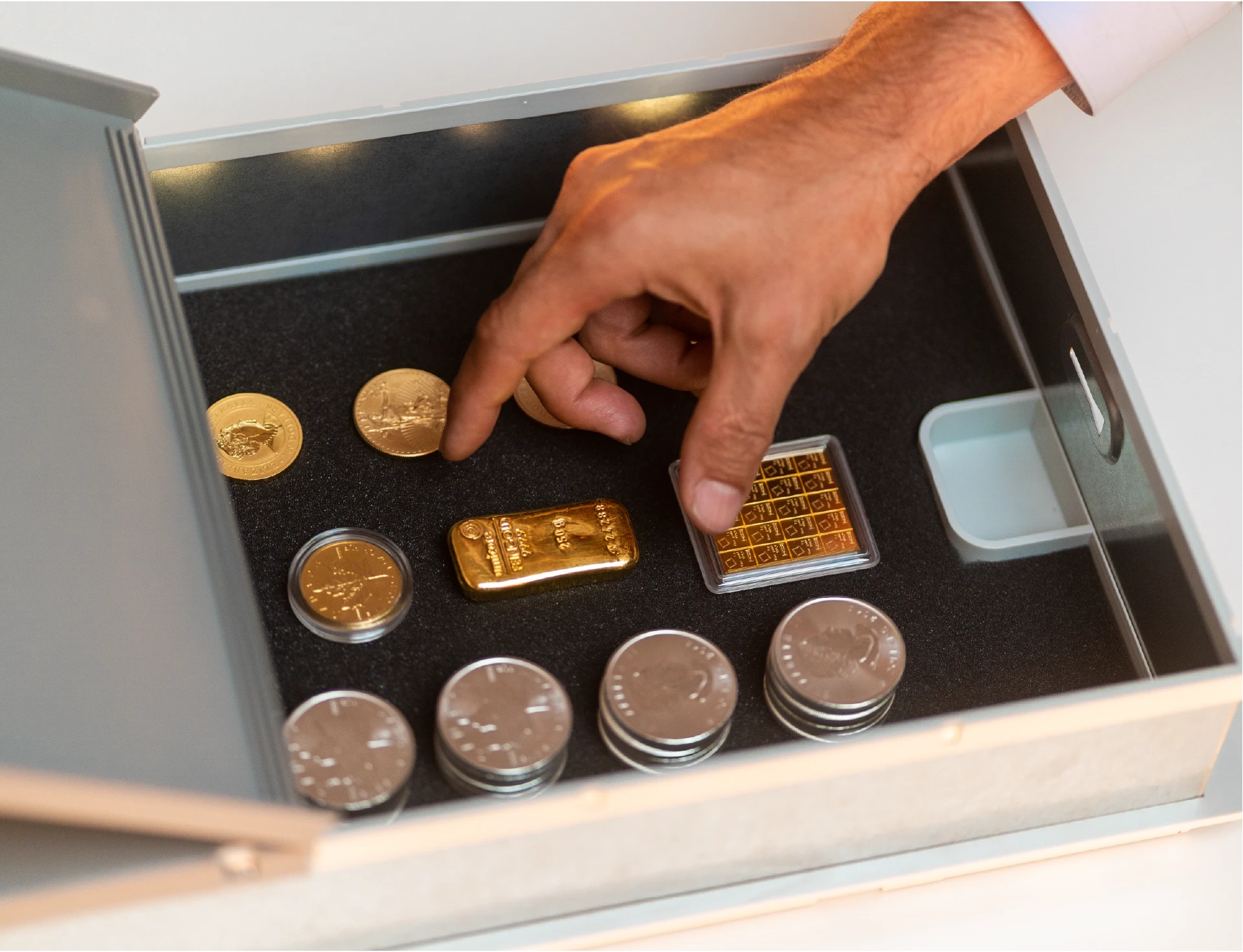
Since Trisor was founded, there has been not a single claim in our company.
Any open questions?
Trust is built best through personal interaction. That’s why we gladly take the time for you. Visit us in person or contact us by phone — we’re always here for you.

Frequently asked questions about safe deposit box insurance
In addition, you have the option to increase your insurance cover individually. Depending on the tariff, each safe deposit box can be insured for an additional up to €500,000.
If you would like higher cover, you can take out supplementary insurance. This costs 0.15% per year of the chosen additional insured sum plus insurance tax.
The insured sum can – depending on the tariff – be increased to up to €500,000.
In the event of a claim, at most the amount for which insurance was taken out will be reimbursed. If the actual value of your valuables exceeds the agreed insured sum, only this agreed sum can be reimbursed.
It is therefore important to adjust the insured sum realistically to the value of the contents.
Many customers deliberately adjust the insured sum to the current value of their contents – particularly for investments such as gold, whose prices have risen significantly in recent years. This makes it possible to limit financial risks in a predictable way and know that valuables are fully protected.
Access to the vault facility takes place exclusively under strictly controlled conditions and is comprehensively monitored.
Read everything about security at Trisor here.
Should such an incident occur nonetheless, it is not covered by the contents insurance, but by the direct liability of the responsible person or – where relevant – of Trisor as operator.
An exclusion from the insurance cover does not mean, however, that customers are left unprotected.
Typical evidence can include, for example:
- Purchase or acquisition receipts
- Photos of the stored valuables
- Certificates or appraisals for high-value items
Which documents are required in an individual case depends on the nature of the claim.
Important: evidence should never be kept together with the valuables in the safe deposit box.
Compensation is provided within the agreed insured sum. For certain items, such as art, different valuation bases may apply.
- Jewellery and gemstones
- Precious metals
- Cash
- Securities
- Certificates and important documents
- Storage media
The exact terms are set out in Trisor's T&Cs and insurance conditions.
In the event of a claim, the nominal value is the decisive value. Compensation is provided within the agreed insured sum.
Learn more about the benefits of storing cash in a safe deposit box.
Typical and accepted evidence can include, for example:
- A bank statement documenting a cash withdrawal or an outflow of funds from another account (e.g. at a bank or savings bank)
- A savings book showing a corresponding cash withdrawal
- Sales receipts for proceeds from the sale of goods (e.g. precious metals, vehicles or other valuables)
- Notarial deeds for real estate sales
- Deeds of gift or corresponding evidence for gifts received
- Certificate of inheritance, will or comparable documents for inherited assets
Important: evidence does not need to be submitted in advance. However, it is advisable to keep such documents outside the safe deposit box so they can be presented on short notice if needed.
- Photos of the stored items
- Documentation of the storage process
- For particularly high-value items: notarial confirmations or sealed safe bags
These measures are supportive but do not replace an individual assessment by the insurer.
Storage media such as USB sticks or hard drives are insured only as physical objects – not the content stored on them.
Digital assets such as cryptocurrencies are not covered by the insurance. In the event of a claim, only the physical storage medium is replaced, not its digital value.